Advanced NLP Techniques for Personalizing Customer Experience and Sentiment Analysis
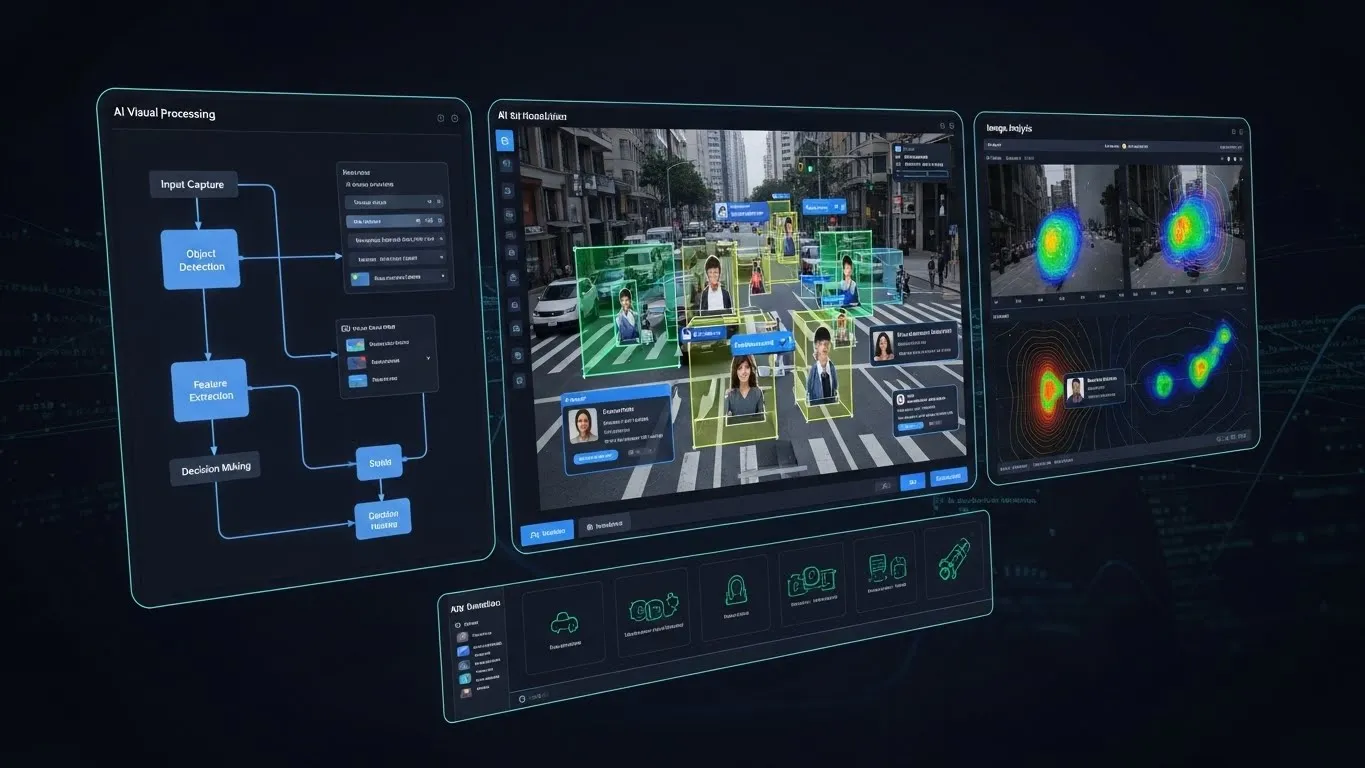
Advanced NLP Techniques for Personalizing Customer Experience and Sentiment Analysis
In today's competitive landscape, understanding and connecting with customers on a deeper level is paramount. Traditional approaches often fall short, struggling to keep pace with the sheer volume and complexity of customer interactions. This is where advanced NLP techniques for personalizing customer experience and sentiment analysis become indispensable. By moving beyond basic keyword matching, businesses can leverage the power of Natural Language Processing (NLP) to unlock profound insights into customer intent, emotion, and context, transforming how they interact and build loyalty. The ability to truly hear and understand your customers' voices, across all touchpoints, is no longer a luxury but a strategic imperative for enhanced satisfaction, sustained loyalty, and a significant competitive advantage.
Key Points:
- Deepen Customer Understanding: Move beyond surface-level analysis to grasp context and intent.
- Automate Hyper-Personalization: Tailor interactions across every customer touchpoint.
- Gain Actionable Insights: Extract nuanced sentiment for strategic decision-making.
- Leverage Ethical AI: Ensure responsible and bias-aware data processing.
- Drive Measurable Growth: Convert improved CX into tangible business outcomes.
The Evolution of NLP in Customer Experience
Natural Language Processing has undergone a dramatic transformation, evolving from rudimentary rule-based systems to sophisticated machine learning and deep learning models. This journey has enabled a significant shift in how businesses interpret customer communication. Initially, NLP primarily focused on basic text processing, such as keyword extraction or simple topic modeling. While useful, these methods often missed the subtle nuances of human language. The modern era of NLP, however, empowers organizations to understand the implicit meanings, emotional tones, and underlying intentions within customer feedback. This progression allows for a more empathetic understanding of customers, scaling human-like comprehension across millions of interactions daily. It is a critical evolution for any organization looking to optimize its customer-facing operations. For a deeper dive into the foundational concepts, explore our Natural Language Processing (NLP) category.
Moving Beyond Keyword Matching
Traditional customer service tools often rely on keyword matching, which, while quick, can lead to misinterpretations and generic responses. A customer expressing "frustration" might mean something entirely different than one stating "delight," even if both mention the same product. Advanced NLP moves beyond this superficial level by incorporating Natural Language Understanding (NLU) to decipher the context, semantics, and pragmatics of language. It also utilizes Natural Language Generation (NLG) to create coherent, human-like responses, enhancing automated customer interactions. This transition is about grasping the intent behind the words, ensuring that interactions are always relevant, timely, and truly helpful.
Advanced NLP Techniques for Personalizing Customer Experience
The real power of modern NLP lies in its capacity to deliver hyper-personalized experiences, making each customer feel uniquely valued. Leveraging deep learning for personalized customer journeys is no longer futuristic thinking but a present-day reality. These techniques allow businesses to anticipate needs and proactively address concerns.
- Contextual Embeddings (e.g., BERT, GPT-3/4): These models represent words as numerical vectors, understanding their meaning based on surrounding text rather than in isolation. This allows for unparalleled precision in intent recognition.
- Personalization Use: By understanding the specific nuance of a customer's query – for instance, whether "slow" refers to internet speed or a delivery time – businesses can tailor product recommendations or support responses with pinpoint accuracy.
- Conversational AI and Advanced Chatbots: Moving beyond rigid scripts, these AI systems leverage large language models to engage in fluid, human-like dialogues.
- Example: A chatbot powered by advanced NLP can dynamically answer complex FAQs, offer proactive problem-solving based on a user's browsing history, or even guide them through intricate troubleshooting steps, providing a genuinely personalized support experience.
- Reinforcement Learning for Personalization: This cutting-edge approach involves AI agents learning optimal interaction strategies directly from customer feedback and behavior. The system continuously refines its approach to maximize positive outcomes.
- Real-world Impact: A recent study by Forrester (2024) indicated that companies adopting RL for customer journeys saw a 15% improvement in conversion rates, demonstrating its tangible business value.
- Customer Journey Mapping with NLP: By analyzing vast amounts of unstructured data from emails, social media, call transcripts, and reviews, NLP can automatically construct comprehensive customer journey maps.
- Benefit: This helps identify common pain points, moments of delight, and critical decision points, enabling companies to proactively personalize future interactions and optimize the entire customer lifecycle.
- Predictive Personalization: Advanced NLP models can analyze historical communication patterns and sentiment shifts to predict future customer needs, churn risk, or upsell opportunities.
- Application: If a customer's language subtly shifts towards dissatisfaction over several interactions, NLP can flag this, prompting a personalized retention offer or proactive support.
Nuanced Sentiment Analysis for Deeper Insights
While basic sentiment analysis might categorize feedback as simply positive, negative, or neutral, modern NLP-driven sentiment analysis delves much deeper. Real-time customer feedback processing for actionable sentiment insights is about uncovering the why behind the feeling, extracting granular, actionable intelligence.
- Emotion Detection: This goes beyond simple polarity to identify specific emotions such as joy, anger, surprise, fear, or sadness.
- Impact: Knowing which emotion a customer is expressing allows companies to respond with greater empathy and tailor their approach accordingly, transforming a potentially negative interaction into a positive one.
- Aspect-Based Sentiment Analysis (ABSA): ABSA pinpoints sentiment towards specific entities or features within a product or service.
- Example: Instead of just knowing a review is "negative," ABSA can reveal, "The camera is great, but the battery life is terrible." This level of detail is crucial for targeted product improvement. To dive deeper into this powerful technique, read our article on Understanding the Power of Aspect-Based Sentiment Analysis.
- Sarcasm and Irony Detection: One of the most challenging aspects of text analysis, detecting sarcasm and irony is crucial for accurate sentiment assessment, preventing misinterpretations of customer feedback. Advanced models leverage contextual clues and linguistic patterns to identify these subtle forms of expression.
- Multimodal Sentiment Analysis: This cutting-edge technique combines text analysis with other data types, such as voice tone from call center recordings or even facial expressions from video interactions.
- Unique Insight: By integrating these different modalities, companies gain a holistic view of customer emotion, which is far richer than text alone. For example, a customer might type "fine" but their voice tone indicates clear dissatisfaction, offering a more truthful insight.
- Cross-Lingual Sentiment Analysis: For global businesses, the ability to analyze customer feedback in multiple languages without needing manual translation is invaluable. Advanced NLP models can accurately gauge sentiment across diverse linguistic contexts.
It's vital to highlight the importance of human-in-the-loop validation in all these advanced techniques. While AI is powerful, human oversight ensures accuracy, especially in ambiguous cases, and helps refine models over time.
Ethical Considerations and Future Trends in NLP for CX
As NLP becomes increasingly sophisticated, so do the ethical considerations surrounding its deployment. Demonstrating industry expertise, it's clear that responsible AI practices are not just good for customers, but also essential for long-term business sustainability. Data privacy, algorithmic bias, and transparency are paramount. As highlighted by MIT Technology Review (2023), the critical need for transparency in AI models, especially those interacting with customers, cannot be overstated. Companies must ensure they use customer data respectfully and ethically. For more insights on this critical topic, consider exploring our piece on Navigating AI Ethics in Customer Service.
Future Trends to Watch:
- Hyper-personalization at Scale: The trend is towards experiences so unique that each customer interaction feels handcrafted, driven by deeper real-time contextual understanding.
- Explainable AI (XAI) for NLP: As AI decisions become more complex, understanding why an NLP model made a particular recommendation or classified sentiment in a certain way will be crucial for trust and compliance.
- Quantum NLP: While still in early research stages, quantum computing holds the potential to process vastly more complex language models, leading to unprecedented levels of comprehension and generation.
- Proactive, Predictive, and Prescriptive AI: Moving beyond just understanding past interactions, NLP will increasingly enable systems to predict future needs and even prescribe actions to optimize customer outcomes.
In my experience, simply deploying an NLP model isn't enough; continuous training with domain-specific data and a commitment to ethical guidelines are paramount for achieving truly transformative and trustworthy results. While the promise of multimodal NLP is immense, companies must first establish robust data governance and privacy frameworks.
Frequently Asked Questions (FAQ)
How do advanced NLP techniques enhance customer personalization?
Advanced NLP techniques go beyond simple keyword matching to understand the context, intent, and emotions behind customer communications. Techniques like contextual embeddings and conversational AI enable systems to tailor responses, product recommendations, and support journeys based on a deep understanding of individual customer needs and preferences, creating genuinely unique and relevant interactions.
What's the key difference between basic and advanced sentiment analysis?
Basic sentiment analysis typically categorizes text as positive, negative, or neutral. Advanced sentiment analysis, however, extracts much more granular insights. It can detect specific emotions (joy, anger), identify sentiment towards particular aspects of a product (Aspect-Based Sentiment Analysis), and even recognize complex linguistic nuances like sarcasm, providing a richer, more actionable understanding of customer feelings.
Are there ethical concerns with using NLP for customer experience?
Yes, ethical concerns are significant. These primarily revolve around data privacy, algorithmic bias, and transparency. Companies must ensure they ethically collect and use customer data, mitigate biases in AI models that could lead to unfair treatment, and be transparent about when and how AI is interacting with customers. Responsible AI practices are crucial for building and maintaining customer trust.
What role does real-time data play in NLP-driven CX?
Real-time data is critical for providing immediate and contextually relevant customer experiences. Advanced NLP processes incoming customer feedback, queries, and interactions instantaneously, allowing businesses to adapt their responses, personalize offers, and even resolve issues in the moment. This immediacy significantly improves customer satisfaction and operational efficiency, making interactions more dynamic and effective.
Transform Your Customer Experience with Advanced NLP
The journey toward truly personalized customer experiences and insightful sentiment analysis is continuously evolving, driven by the rapid advancements in Natural Language Processing. By embracing these sophisticated techniques, businesses can move beyond generic interactions, fostering deeper connections, predicting needs, and delivering unparalleled value to every customer. This ultimately translates into enhanced loyalty, stronger brand reputation, and significant growth.
Ready to transform your customer experience and unlock the full potential of your customer data? Start exploring how advanced NLP can provide a competitive edge in understanding and engaging with your audience. We encourage you to share your thoughts, questions, or experiences in the comments below.
Extended Reading:
- Future of Conversational AI in Business
- Implementing AI for Customer Journey Optimization
- The Role of Data Governance in Advanced Analytics