AI Development Best Practices: Build Innovative AI Applications
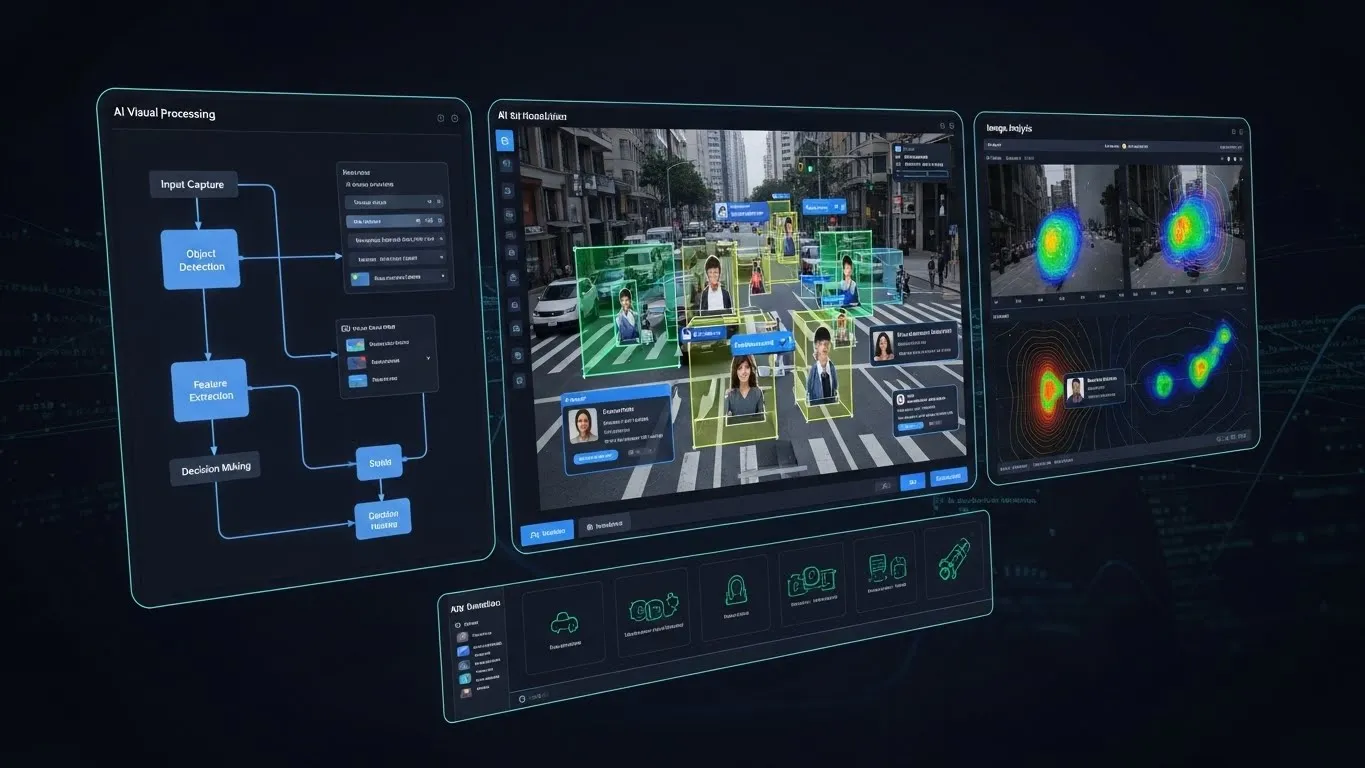
AI Development Best Practices: Build Innovative AI Applications
The landscape of artificial intelligence is evolving at an unprecedented pace, transforming industries and creating new opportunities. To truly harness this power, organizations must adopt robust AI development best practices. Building innovative AI applications isn't just about cutting-edge algorithms; it's about a holistic approach that encompasses everything from data governance and ethical considerations to robust deployment and continuous monitoring. This article delves into the essential strategies and methodologies that empower developers and businesses to create AI solutions that are not only intelligent but also responsible, secure, and scalable. Embracing these practices ensures your AI initiatives deliver sustainable value and maintain trust.
Key Points for Innovative AI Development:
- Ethical AI Design: Prioritize fairness, transparency, and accountability from inception.
- Robust Data Management: Ensure data quality, privacy, and effective governance.
- Scalable MLOps: Streamline deployment, monitoring, and model lifecycle management.
- Security by Design: Integrate cybersecurity measures throughout the AI pipeline.
- Continuous Learning: Foster iterative improvement and adaptation of AI models.
Laying the Foundation: Strategic Planning for AI Projects
Successful AI development begins long before the first line of code is written. A strategic planning phase is critical for defining objectives, understanding constraints, and establishing a clear roadmap. This involves more than just technical specifications; it requires a deep dive into business needs and potential societal impacts.
Defining Clear Objectives and Scope for AI Applications
Every innovative AI application must address a specific problem or create a distinct value proposition. Vague goals lead to unfocused development and wasted resources. Start by clearly articulating the problem statement and the desired outcomes. For instance, instead of "build an AI," aim for "develop an AI model to reduce fraud detection time by 30%." This clarity helps in defining the scope, identifying necessary data, and setting measurable success metrics. Early stakeholder engagement is crucial here, ensuring alignment across business units and technical teams.
Data Governance and Preparation: The Backbone of AI Development
High-quality data is the lifeblood of any effective AI system. Without it, even the most sophisticated algorithms will falter. Implementing strong data governance policies is a cornerstone of AI development best practices. This includes establishing clear rules for data collection, storage, access, and usage, ensuring compliance with regulations like GDPR or CCPA.
- Data Quality: Focus on accuracy, completeness, consistency, and timeliness. Poor data quality is a leading cause of AI project failure.
- Data Labeling and Annotation: For supervised learning, accurate and consistent labeling is paramount. Consider leveraging specialized tools or expert human annotators.
- Data Privacy and Security: Anonymize or pseudonymize sensitive data where possible. Implement robust access controls and encryption to protect personal information. This is especially critical for AI applications in sensitive domains like healthcare or finance, where data breaches can have severe consequences.
Building Responsible AI: Ethical Considerations and Bias Mitigation
As AI becomes more pervasive, the ethical implications of its use grow in importance. Building responsible AI is not merely a compliance issue; it's a fundamental aspect of AI development best practices that fosters trust and ensures long-term success.
Integrating Ethical AI Principles from Inception
Ethical considerations should be woven into every stage of the AI lifecycle, not merely an afterthought. This means designing for fairness, transparency, accountability, and privacy. For example, when developing an AI for loan approvals, consider how the model might inadvertently discriminate against certain demographics.
- Fairness: Actively work to prevent and mitigate algorithmic bias. This involves diverse training data and careful model evaluation.
- Transparency and Explainability (XAI): Strive to understand why an AI model makes certain decisions. Tools and techniques for explainable AI are becoming increasingly vital, particularly in regulated industries.
- Accountability: Establish clear lines of responsibility for the AI system's outcomes, both positive and negative.
Strategies for Mitigating Bias in AI Models
Bias can creep into AI systems through various channels, from biased training data to flawed algorithm design. Proactive strategies are essential for addressing this. A 2024 report by the AI Ethics Institute highlighted that over 60% of surveyed organizations identified data bias as a significant challenge in their AI initiatives.
- Diverse Data Collection: Ensure training datasets are representative of the target population and avoid over-representation or under-representation of specific groups.
- Bias Detection Tools: Utilize specialized tools and metrics to identify and quantify bias in datasets and model predictions.
- Algorithmic Fairness Techniques: Employ techniques like re-weighting, adversarial debiasing, or post-processing to reduce bias in model outputs.
- Human-in-the-Loop: Incorporate human oversight and review mechanisms, especially for critical decisions, to catch and correct biased outcomes.
Engineering for Performance and Scalability: MLOps and Deployment
Once an AI model is developed, the journey is far from over. Deploying, monitoring, and maintaining AI applications in production requires a robust operational framework, often referred to as MLOps. These AI development best practices ensure models remain effective and performant over time.
Implementing Robust MLOps for Lifecycle Management
MLOps (Machine Learning Operations) extends DevOps principles to machine learning. It's about automating and streamlining the entire AI lifecycle, from experimentation to deployment and monitoring. This includes version control for data, code, and models, automated testing, and continuous integration/continuous deployment (CI/CD) pipelines. For more insights into optimizing AI model deployment, readers can explore related articles on machine learning operations.
- Automated Pipelines: Automate data ingestion, model training, evaluation, and deployment to reduce manual errors and speed up iteration cycles.
- Model Versioning: Keep track of different model versions, their training data, and performance metrics for reproducibility and rollback capabilities.
- Infrastructure as Code: Manage the underlying infrastructure for AI applications using code, enabling consistent and scalable environments.
Monitoring and Maintaining AI Models in Production
The performance of AI models can degrade over time due to concept drift, data drift, or changes in the operational environment. Continuous monitoring is therefore a non-negotiable AI development best practice.
- Performance Monitoring: Track key metrics like accuracy, precision, recall, and F1-score to detect performance degradation.
- Data Drift Detection: Monitor incoming data for changes in distribution that could impact model predictions.
- Concept Drift Detection: Identify when the relationship between input features and target variables changes, signaling that the model needs retraining.
- Automated Retraining: Set up triggers for automatic model retraining when performance drops or significant data/concept drift is detected. A study by Gartner in late 2023 indicated that organizations employing proactive AI model monitoring saw a 25% reduction in unforeseen operational issues.
Securing Your AI: Cybersecurity and Fraud Detection Integration
Given the sensitive nature of data often processed by AI, security is paramount. Integrating cybersecurity measures throughout the AI development lifecycle is a critical aspect of AI development best practices, especially within the AI Security and Fraud Detection category.
Protecting AI Systems from Adversarial Attacks
AI models are vulnerable to various types of adversarial attacks, where malicious inputs are designed to trick the model into making incorrect predictions.
- Adversarial Training: Train models with adversarial examples to improve their robustness against such attacks.
- Input Validation and Sanitization: Implement rigorous checks on all incoming data to detect and filter out suspicious inputs.
- Model Hardening: Employ techniques to make models more resilient to tampering and extraction attacks.
Data Privacy and Compliance in AI Development
Adhering to data privacy regulations is not just a legal requirement but a fundamental ethical obligation. AI systems must be designed with privacy in mind.
- Differential Privacy: Implement techniques that add noise to data to protect individual privacy while still allowing for aggregate analysis.
- Homomorphic Encryption: Explore advanced encryption methods that allow computations on encrypted data without decrypting it first, offering enhanced privacy.
- Regular Security Audits: Conduct frequent security audits and penetration testing specifically tailored for AI systems to identify and address vulnerabilities. For more on this, consider exploring resources on secure AI system design.
Future-Proofing Your AI: Innovation and Continuous Improvement
The field of AI is dynamic. To build truly innovative AI applications, organizations must embrace a culture of continuous learning, experimentation, and adaptation.
Fostering a Culture of Experimentation and Innovation
Encourage teams to explore new algorithms, architectures, and approaches. Dedicate resources for R&D and allow for calculated risks. This iterative approach is key to staying ahead.
- A/B Testing AI Models: Experiment with different model versions in production to determine which performs best under real-world conditions.
- Leveraging Latest Research: Stay informed about breakthroughs in machine learning, deep learning, and related fields to incorporate cutting-edge techniques.
Scalable AI Architectures and Cloud Integration
Designing AI systems that can scale with growing data volumes and user demands is crucial. Cloud platforms offer flexible and powerful infrastructure for AI.
- Microservices Architecture: Break down complex AI applications into smaller, independent services that can be developed, deployed, and scaled independently.
- Serverless Computing: Utilize serverless functions for event-driven AI tasks, reducing operational overhead.
- Hybrid Cloud Strategies: Combine on-premise and cloud resources to optimize for cost, performance, and data residency requirements.
FAQ Section
Q1: What are the most critical first steps when starting an AI development project? A1: The most critical first steps involve clearly defining the problem you aim to solve and the desired business outcomes. This includes identifying key stakeholders, assessing data availability and quality, and establishing a robust data governance framework. Without a clear problem statement and quality data, even the most advanced AI models will struggle to deliver value.
Q2: How can organizations ensure their AI applications are ethical and fair? A2: Ensuring ethical and fair AI requires integrating principles like fairness, transparency, and accountability from the project's inception. This means actively working to mitigate bias in data and algorithms, employing explainable AI (XAI) techniques, and establishing human oversight. Regular ethical audits and diverse development teams also contribute significantly.
Q3: What role does MLOps play in building innovative AI applications? A3: MLOps is crucial for transforming innovative AI prototypes into reliable, scalable, and maintainable production systems. It streamlines the entire AI lifecycle, from data preparation and model training to deployment, monitoring, and continuous improvement. By automating these processes, MLOps ensures models remain performant and adaptable to changing conditions.
Q4: How can AI development teams address security concerns effectively? A4: Addressing security concerns in AI development requires a "security by design" approach. This includes protecting against adversarial attacks through robust training and input validation, ensuring data privacy through techniques like differential privacy or homomorphic encryption, and conducting regular security audits. Integrating AI security into existing cybersecurity frameworks is also vital.
Conclusion: Driving Innovation with Responsible AI Practices
Adopting AI development best practices is no longer optional; it's a prerequisite for building innovative AI applications that deliver real value and maintain public trust. From strategic planning and robust data governance to ethical design, scalable MLOps, and