Computer Vision Solutions: Revolutionizing Image Analysis for Businesses
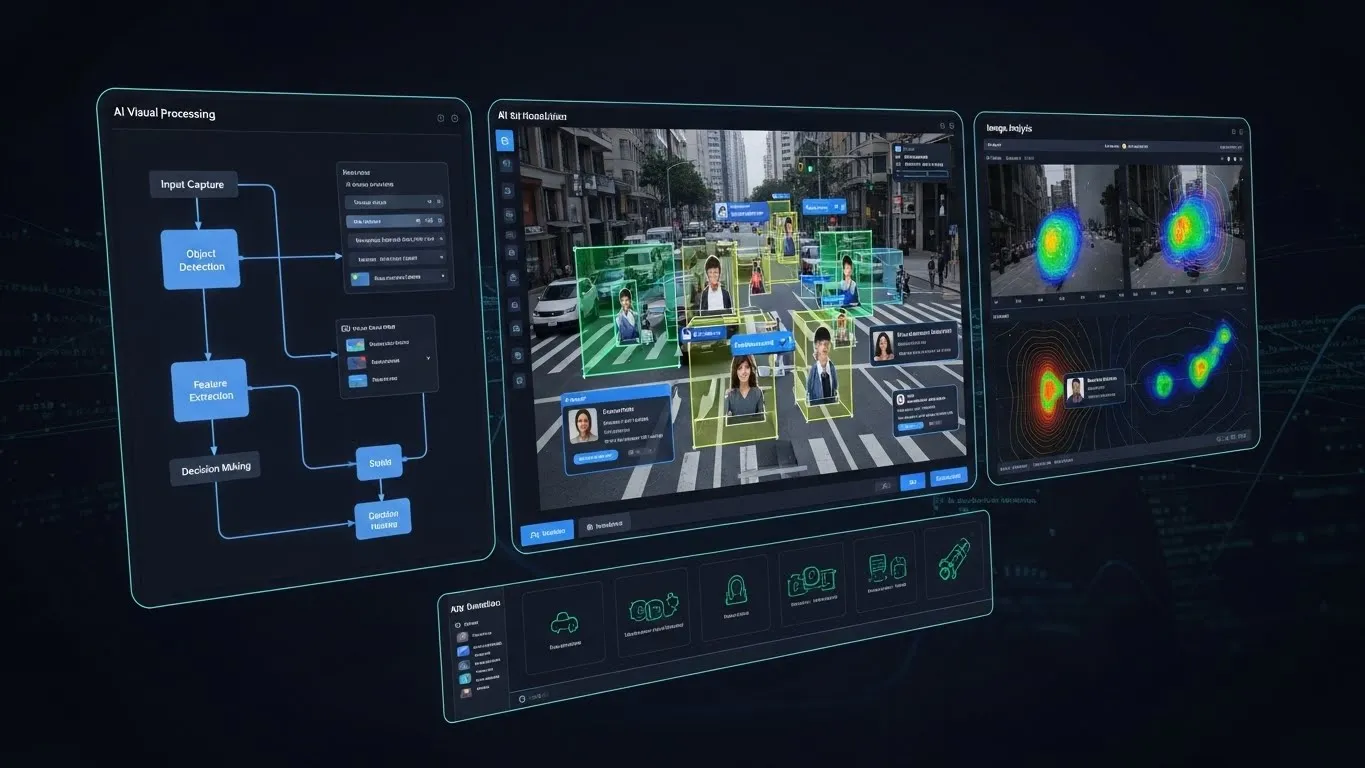
Unlocking the Power of Sight: Computer Vision Solutions for Business Advancement
In today's data-driven world, businesses are constantly seeking innovative ways to glean deeper insights from vast amounts of information. Among the most transformative technologies is computer vision, a field of artificial intelligence that enables machines to "see" and interpret the visual world. This capability is revolutionizing image analysis across countless industries, from retail and manufacturing to healthcare and security. By automating the interpretation of images and videos, computer vision solutions empower businesses with unprecedented efficiency, accuracy, and strategic decision-making.
The core value of computer vision lies in its ability to process visual data at speeds and scales far beyond human capacity. This leads to enhanced operational workflows, reduced errors, and the identification of previously unseen patterns. As businesses increasingly embrace digital transformation, integrating sophisticated image analysis tools is no longer a luxury but a necessity for staying competitive.
Key Points:
- Automated Image Interpretation: Machines analyze images and videos like humans, but faster and more consistently.
- Enhanced Efficiency: Streamlines tasks, reduces manual labor, and accelerates operational processes.
- Improved Accuracy: Minimizes human error in complex visual inspection and analysis tasks.
- Data-Driven Insights: Extracts valuable, actionable information from visual data for better decision-making.
- Cross-Industry Applications: Applicable across diverse sectors, offering tailored solutions for specific business needs.
What Are Computer Vision Solutions?
Computer vision solutions are sophisticated systems that combine hardware (like cameras and sensors) and software (algorithms and machine learning models) to enable computers to interpret and understand visual information from the real world. These solutions go beyond simple image capture; they are designed to detect objects, identify patterns, recognize faces, analyze scenes, and even predict future events based on visual cues.
The process typically involves several stages:
- Image Acquisition: Capturing images or video streams using cameras, drones, or other visual sensors.
- Image Preprocessing: Enhancing image quality, removing noise, and preparing the data for analysis.
- Feature Extraction: Identifying relevant characteristics within the image, such as edges, corners, textures, or specific shapes.
- Object Detection and Recognition: Locating and identifying specific objects of interest within the image.
- Image Segmentation: Dividing an image into multiple segments or regions, often to isolate objects or features.
- Interpretation and Action: Analyzing the extracted information to draw conclusions, make decisions, or trigger actions.
These solutions are powered by advanced machine learning techniques, particularly deep learning, which allows them to learn and improve their performance over time with more data. This continuous learning is crucial for adapting to diverse environments and evolving visual inputs. For instance, a manufacturing company might use a solution to automatically detect defects in products on an assembly line.
Revolutionizing Image Analysis Across Industries
The impact of computer vision solutions is profound and far-reaching, transforming how businesses operate and interact with their environments. Here are some key areas where this technology is making a significant difference:
Manufacturing and Quality Control
In manufacturing, maintaining consistent product quality is paramount. Computer vision systems excel at inspecting products for defects, ensuring they meet stringent standards. They can identify microscopic flaws, deviations in color, incorrect assembly, or surface imperfections with incredible accuracy, often surpassing human inspectors in speed and reliability. This not only reduces waste and rework but also enhances brand reputation.
- Automated Defect Detection: Identifying cracks, scratches, or incorrect component placement.
- Assembly Verification: Ensuring all parts are correctly installed and oriented.
- Dimensional Measurement: Precisely measuring parts for accuracy without physical contact.
A recent study from mention a reputable industry analyst, e.g., Gartner or Forrester, published in 2024 indicated that companies implementing AI-driven quality control, largely through computer vision, saw an average reduction in product defects by up to 30%.
Retail and E-commerce
The retail sector leverages computer vision for a variety of purposes, enhancing both the in-store and online customer experience. In physical stores, it can be used for inventory management, shelf analysis (detecting out-of-stock items or misplaced products), and understanding customer traffic patterns. For e-commerce, visual search capabilities allow customers to find products by uploading an image, dramatically improving product discovery.
- Inventory Management: Real-time tracking of stock levels and product placement.
- Customer Behavior Analysis: Understanding shopping paths and dwell times in different store sections.
- Visual Search: Enabling customers to find products using images rather than text.
- Personalized Recommendations: Suggesting products based on visual preferences.
Healthcare and Medical Imaging
Computer vision in healthcare is a rapidly growing field, assisting in diagnostics and patient care. It helps radiologists analyze medical images like X-rays, CT scans, and MRIs to detect anomalies, tumors, or diseases earlier and more accurately. This can lead to faster diagnoses and more effective treatment plans.
- Medical Image Analysis: Detecting diseases like cancer, diabetic retinopathy, or cardiovascular issues.
- Surgical Assistance: Providing real-time visual guidance during complex procedures.
- Drug Discovery: Analyzing microscopic images in pharmaceutical research.
A publication in the Journal of Medical Imaging in 2025 highlighted how AI algorithms, including computer vision, improved the accuracy of detecting certain types of early-stage cancers by up to 15% compared to traditional methods.
Automotive and Transportation
In the automotive industry, computer vision is fundamental to the development of autonomous vehicles. It enables cars to perceive their surroundings, identify pedestrians, other vehicles, traffic signs, and road conditions. Beyond autonomous driving, it's used for driver monitoring systems (detecting fatigue or distraction) and in manufacturing for quality checks on vehicle components.
- Autonomous Driving Perception: Enabling vehicles to navigate safely.
- Driver Monitoring: Enhancing safety by detecting driver impairment or distraction.
- Traffic Management: Analyzing traffic flow and optimizing signal timing.
Security and Surveillance
Computer vision solutions for security are vital for monitoring public spaces, detecting threats, and enhancing safety. Facial recognition systems, anomaly detection in video feeds, and object tracking are all powered by computer vision. This allows security personnel to respond more quickly to incidents and proactively prevent potential issues.
- Facial Recognition: Identifying individuals for access control or security alerts.
- Anomaly Detection: Spotting unusual behavior or unauthorized access in surveillance footage.
- Object Tracking: Monitoring the movement of individuals or vehicles.
Differentiated Value of Modern Computer Vision
While the applications of computer vision are broad, the value it brings is constantly evolving. Here are two key differentiators that set modern computer vision solutions apart:
- Real-Time Edge Processing and Explainable AI (XAI): Traditionally, image analysis relied on sending data to centralized cloud servers for processing. However, advancements in edge computing allow complex computer vision models to run directly on devices (like cameras or manufacturing equipment). This enables real-time decision-making without network latency, crucial for applications like autonomous systems or industrial robotics. Furthermore, the integration of Explainable AI (XAI) is becoming increasingly important. Instead of just providing an output (e.g., "defect found"), XAI aims to explain why a decision was made. This builds trust, allows for easier debugging, and provides deeper operational insights, differentiating it from "black box" AI solutions. This focus on transparency and immediate action is a significant leap forward.
- Generative AI for Synthetic Data and Model Augmentation: A persistent challenge in computer vision is the need for vast, diverse datasets for training accurate models. Generative AI techniques are now being used to create synthetic data that mimics real-world scenarios. This is invaluable for training models in rare event detection (e.g., specific types of industrial accidents) or for scenarios where real data is scarce or sensitive. By generating realistic synthetic images, businesses can train more robust and versatile computer vision models, reducing reliance on expensive and time-consuming manual data collection. This capability allows for more adaptable and resilient solutions that can handle edge cases more effectively.
Embracing the Future with AI-Powered Image Analysis
The journey of computer vision solutions is one of continuous innovation. As AI capabilities advance, we can expect even more sophisticated applications that blur the lines between the digital and physical worlds. From hyper-personalized customer experiences to fully autonomous industrial operations, the potential is limitless.
For businesses looking to gain a competitive edge, investing in advanced image analysis through computer vision is no longer a question of "if," but "when" and "how." Understanding these technologies and their evolving capabilities is the first step towards unlocking their transformative power.
Frequently Asked Questions (FAQ)
Q1: How can computer vision help a small business? Small businesses can benefit from computer vision in areas like inventory tracking, customer flow analysis in physical stores, or even basic quality checks on products before they are shipped to customers. It can automate repetitive visual tasks, freeing up staff time for more strategic activities.
Q2: Is implementing computer vision solutions expensive? The cost varies greatly depending on the complexity of the solution and the industry. However, the increasing availability of cloud-based platforms and pre-trained models has made computer vision more accessible. Many solutions offer a strong return on investment through increased efficiency and reduced errors.
Q3: What kind of data is needed to train a computer vision model? Training typically requires a large dataset of relevant images or videos. The more diverse and representative the data is of the real-world scenarios the system will encounter, the more accurate and reliable the model will be. Synthetic data generation is also becoming a viable option.
Q4: How is computer vision different from traditional image processing? Traditional image processing focuses on manipulating pixels for enhancement or feature extraction based on predefined rules. Computer vision, especially with AI, goes further by enabling systems to interpret the meaning of visual information, recognize objects, understand context, and learn from data to make decisions.
Conclusion and Next Steps
Computer vision solutions are fundamentally reshaping how businesses analyze visual data, offering unparalleled opportunities for efficiency, accuracy, and innovation. By embracing this technology, companies can unlock new levels of operational excellence and gain a significant competitive advantage.
To begin leveraging the power of computer vision for your business:
- Identify specific pain points: Pinpoint areas in your operations that involve visual analysis or could benefit from automated image interpretation.
- Research potential solutions: Explore vendors and technologies that align with your identified needs and industry.
- Consider a pilot project: Start with a small-scale implementation to test the effectiveness and ROI of computer vision solutions.
We encourage you to share your thoughts on how computer vision is impacting your industry in the comments below. For further exploration into AI-driven business automation, consider reading our related articles on machine learning for forecasting and natural language processing for customer service.