Key NLP Techniques: Enhancing Business Communication and Data Insights with AI
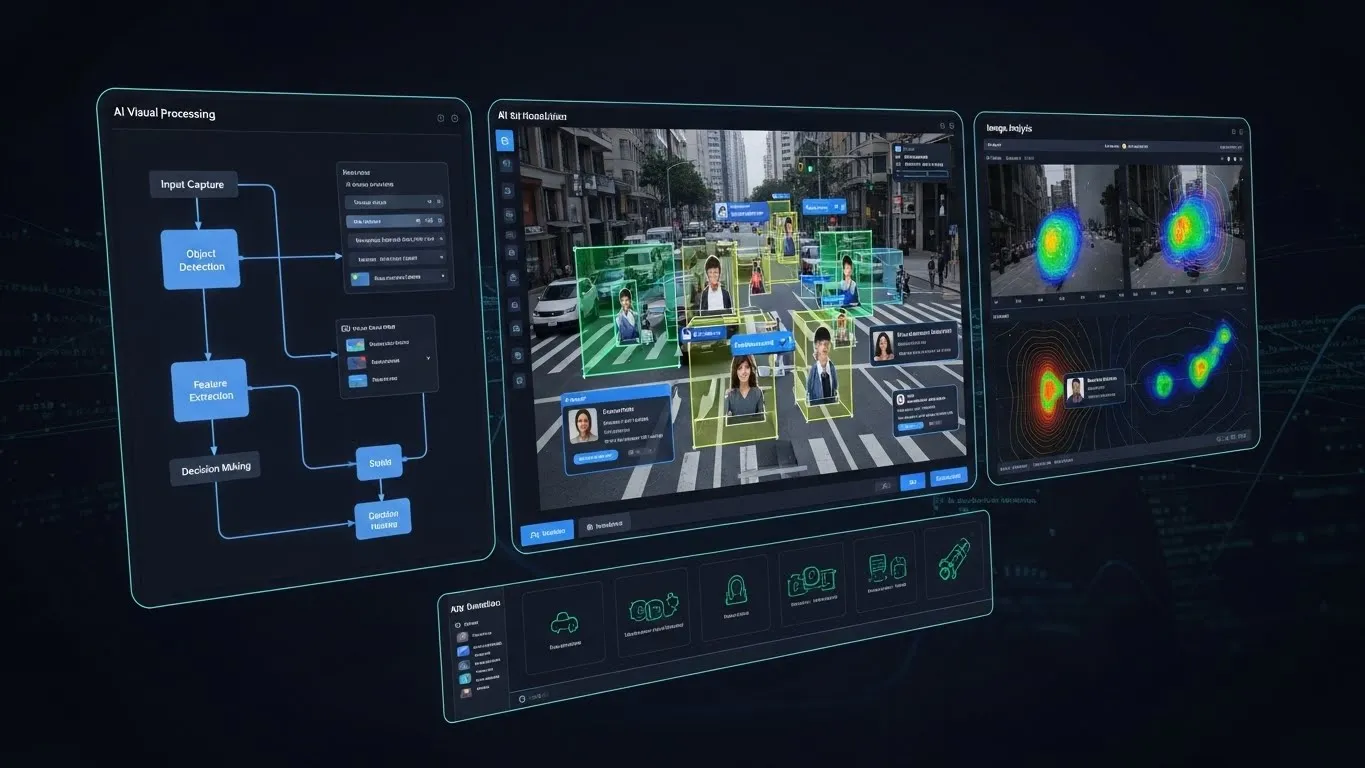
Key NLP Techniques: Enhancing Business Communication and Data Insights with AI
Natural Language Processing (NLP), a powerful branch of artificial intelligence, is transforming how businesses interact with information and each other. By enabling machines to understand, interpret, and generate human language, key NLP techniques are unlocking unprecedented capabilities for enhancing communication, automating processes, and extracting valuable intelligence from vast amounts of unstructured text data. This goes beyond simple keyword searches, allowing for a deeper, contextual understanding that drives smarter decision-making.
For any organization aiming to thrive in a data-driven world, leveraging these advanced AI capabilities is no longer optional. From revolutionizing customer service to providing granular market insights, NLP offers a strategic advantage. It empowers companies to streamline operations, personalize interactions, and gain a competitive edge by truly understanding the voice of their customers and the pulse of the market.
Key Points:
- 🚀 NLP transforms unstructured text into actionable business insights.
- 💬 Enhances customer service, internal communication, and market research.
- 💡 Core techniques include sentiment analysis, NER, and topic modeling.
- 📈 Drives operational efficiency and informed strategic decisions.
- 🔒 Focus on explainable AI and specialized Small Language Models (SLMs).
Understanding Key NLP Techniques for Business
The power of NLP lies in its diverse toolkit of techniques, each designed to address specific aspects of language processing. Mastering these key NLP techniques is crucial for any business looking to leverage AI effectively.
Sentiment Analysis
Sentiment analysis, also known as opinion mining, automatically identifies and extracts subjective information from text, determining the emotional tone (positive, negative, neutral). This technique is invaluable for understanding customer feedback, social media mentions, and product reviews at scale. Businesses can quickly gauge public perception and respond proactively to critical issues or capitalize on positive trends. For instance, a leading telecommunications company used sentiment analysis to monitor social media during new product launches, identifying key areas of dissatisfaction within hours, not days, as noted in a 2024 report by "AI in Business Quarterly."
Named Entity Recognition (NER)
NER is the process of identifying and classifying named entities in text into predefined categories such as person names, organizations, locations, medical codes, time expressions, quantities, monetary values, and percentages. This is fundamental for information extraction and structuring unstructured data. Imagine sifting through thousands of legal documents; NER can pinpoint every mention of a company name, date, or contract clause, significantly speeding up legal reviews and compliance checks.
Topic Modeling
Topic modeling is an unsupervised machine learning technique that discovers abstract "topics" that occur in a collection of documents. It helps in understanding the main themes present in large text corpuses without requiring prior labeling. This is particularly useful for market research, where analyzing thousands of customer feedback forms or competitive intelligence reports can reveal emerging trends or pain points that might otherwise go unnoticed. A retail giant, for example, might use topic modeling on customer support transcripts to identify frequent complaints about product durability or shipping delays.
Text Summarization
As information overload grows, automatic text summarization becomes increasingly vital. This technique condenses lengthy texts into shorter, coherent summaries while retaining the main points. It can be extractive (pulling key sentences directly from the text) or abstractive (generating new sentences that capture the essence). For executives and analysts, this means quicker digestion of lengthy reports, news articles, or research papers, enabling faster decision-making.
Natural Language Generation (NLG)
While other techniques focus on understanding, Natural Language Generation (NLG) focuses on producing human-like text from structured data. This can range from generating personalized marketing emails and product descriptions to creating dynamic reports and even conversational AI responses. NLG is pivotal for automating content creation and personalizing communication at scale, offering significant efficiency gains. Businesses can deploy NLG to generate thousands of unique product descriptions for e-commerce sites, drastically reducing manual effort.
Enhancing Business Communication with NLP
The direct impact of NLP on communication is profound, both externally with customers and internally within an organization. By applying key NLP techniques, businesses can achieve clearer, faster, and more effective interactions.
Streamlining Customer Interactions
NLP powers the next generation of customer service. Chatbots and virtual assistants leverage NLP to understand customer queries, provide instant responses, and even perform complex transactions. This not only improves customer satisfaction by offering 24/7 support but also frees human agents to handle more complex or sensitive issues. For example, a recent industry survey highlighted that companies using AI-powered chatbots saw a 30% reduction in customer service resolution times (Source: "Global AI Insights," 2023). Moreover, analyzing customer sentiment from conversations helps personalize interactions and improve agent training. For those interested in deeper dive into AI's role in customer interactions, you might explore articles on /articles/transforming-customer-experience-with-ai-chatbots.
Improving Internal Collaboration
Beyond external communication, NLP significantly boosts internal efficiency. Tools that use NLP can automatically categorize emails, flag urgent messages, and summarize team discussions. This reduces information overload and ensures critical information reaches the right people faster. For large enterprises, knowledge management systems enhanced with NLP can quickly retrieve specific information from vast internal documentation, aiding onboarding, compliance, and strategic planning. This creates a more informed and agile workforce.
Unlocking Data Insights with AI and NLP
One of the most transformative applications of NLP is its ability to turn unstructured text — emails, reviews, social media, reports — into structured, actionable data. This is where data insights with AI truly shine.
Market Intelligence & Competitive Analysis
NLP techniques like sentiment analysis, topic modeling, and NER are invaluable for competitive analysis. By monitoring news, social media, and competitor websites, businesses can track brand perception, identify market trends, and understand competitor strategies. A fast-food chain, for instance, could analyze thousands of online reviews about competitors to find gaps in service or product offerings, informing their own menu development or marketing campaigns. This provides a rich, real-time understanding of the market landscape.
Risk Management & Compliance
In regulated industries, managing vast amounts of documentation is a significant challenge. NLP can automate the review of contracts, legal documents, and compliance reports, identifying potential risks, inconsistencies, or non-compliance issues much faster than manual processes. This is particularly relevant in finance and healthcare, where regulatory changes are frequent and penalties for non-compliance are severe. NLP helps in proactive risk identification and ensuring adherence to complex legal frameworks. For a broader understanding of AI's role in data analysis, consider exploring topics on /articles/leveraging-ai-for-advanced-data-analytics.
Differentiated Insights: Explainable AI and SLMs in Enterprise NLP
While the core techniques are powerful, the cutting edge of NLP for business emphasizes trust and practical deployment.
The Imperative of Explainable AI (XAI) in NLP
A significant challenge with complex AI models, including many NLP systems, has been their "black box" nature. Businesses are increasingly demanding Explainable AI (XAI) in NLP applications. XAI allows users to understand why an NLP model made a specific prediction or classification. For example, in a loan application review system using NLP, XAI could highlight the specific sentences or phrases that led to a "high-risk" assessment. This is critical for regulatory compliance, auditing, and building user trust, moving beyond simply getting a result to understanding the underlying reasoning. Adopting XAI is a differentiator for ethical and robust AI deployment.
The Strategic Advantage of Small Language Models (SLMs)
While large language models (LLMs) like GPT are powerful, their computational cost, data privacy implications, and general-purpose nature aren't always ideal for enterprise-specific tasks. This has led to a growing trend of leveraging Small Language Models (SLMs). SLMs are smaller, more specialized, and often trained on domain-specific datasets. They offer several advantages: lower operational costs, faster inference times, reduced data privacy risks (as they can be run on-premise), and superior performance for narrow, well-defined tasks. For instance, a financial institution might train an SLM specifically for identifying fraud patterns in transaction descriptions, achieving higher accuracy and better security than a general LLM. SLMs represent a cost-effective and secure pathway to specialized NLP solutions.
Navigating Challenges and Future Trends
Implementing NLP solutions in a business environment comes with its own set of challenges, but the future promises even greater capabilities.
Implementation Hurdles and Best Practices
Despite the clear benefits, integrating NLP can be complex. Challenges include data quality issues (noisy or biased data), the need for specialized expertise, and ensuring seamless integration with existing IT infrastructure. Best practices involve starting with well-defined use cases, investing in high-quality data labeling, and collaborating with experienced AI development teams. A phased approach with clear KPIs is vital for success.
The Evolving Landscape of NLP
The field of NLP is rapidly evolving, driven by advancements in deep learning and transformer architectures. We are moving towards more sophisticated, multimodal AI systems that can process and understand information from various sources — text, images, and audio — simultaneously. This convergence of AI domains like NLP and Computer Vision Applications will open new frontiers for understanding complex real-world scenarios, such as analyzing customer feedback alongside product images or detecting emotion from both voice and text in a call center.
Frequently Asked Questions (FAQ)
What is Natural Language Processing (NLP) in simple terms?
NLP is a field of artificial intelligence that teaches computers to understand, interpret, and generate human language. It allows machines to process text and speech data in a way that is meaningful to humans, enabling tasks like translation, summarization, and sentiment analysis. Essentially, it helps computers "read" and "write" like people.
How can NLP improve customer service operations?
NLP significantly enhances customer service by powering chatbots and virtual assistants that can respond to queries 24/7, reducing wait times and improving efficiency. It also analyzes customer feedback and interactions to identify common issues, sentiments, and preferences, allowing businesses to personalize support and proactively address customer needs.
What are the main benefits of using NLP for data insights?
Using NLP for data insights transforms vast amounts of unstructured text into actionable intelligence. It helps businesses understand market trends, perform competitive analysis, identify emerging risks in compliance documents, and extract specific information from large datasets quickly. This leads to more informed strategic decisions and a deeper understanding of customer and market dynamics.
Is NLP suitable for small businesses, or only large enterprises?
NLP is increasingly accessible and beneficial for businesses of all sizes. While large enterprises might deploy complex, custom-built systems, small businesses can leverage off-the-shelf NLP APIs and tools for tasks like social media monitoring, customer review analysis, and automated content generation. Scalable cloud-based NLP solutions make it a viable option for even modest operations.
Conclusion and Next Steps
The integration of key NLP techniques with AI is no longer a futuristic concept but a present-day necessity for businesses seeking to enhance communication and unlock powerful data insights. From streamlining customer interactions with sophisticated chatbots to discerning market sentiments from vast datasets, NLP provides the tools to transform how organizations operate and compete. By understanding and strategically applying these techniques, businesses can foster deeper connections with their audiences and make smarter, data-driven decisions.
Are you ready to harness the power of NLP for your business? Explore how these AI innovations can revolutionize your communication strategies and data analysis processes. We encourage you to share your thoughts in the comments below or subscribe to our newsletter for more insights into cutting-edge AI applications.
For extended reading, delve into topics such as:
- The impact of ethical AI on business practices.
- Advanced techniques in multimodal AI for comprehensive data analysis.
- The latest breakthroughs in domain-specific AI models.