Mastering Machine Learning Algorithms for Business Insights Today
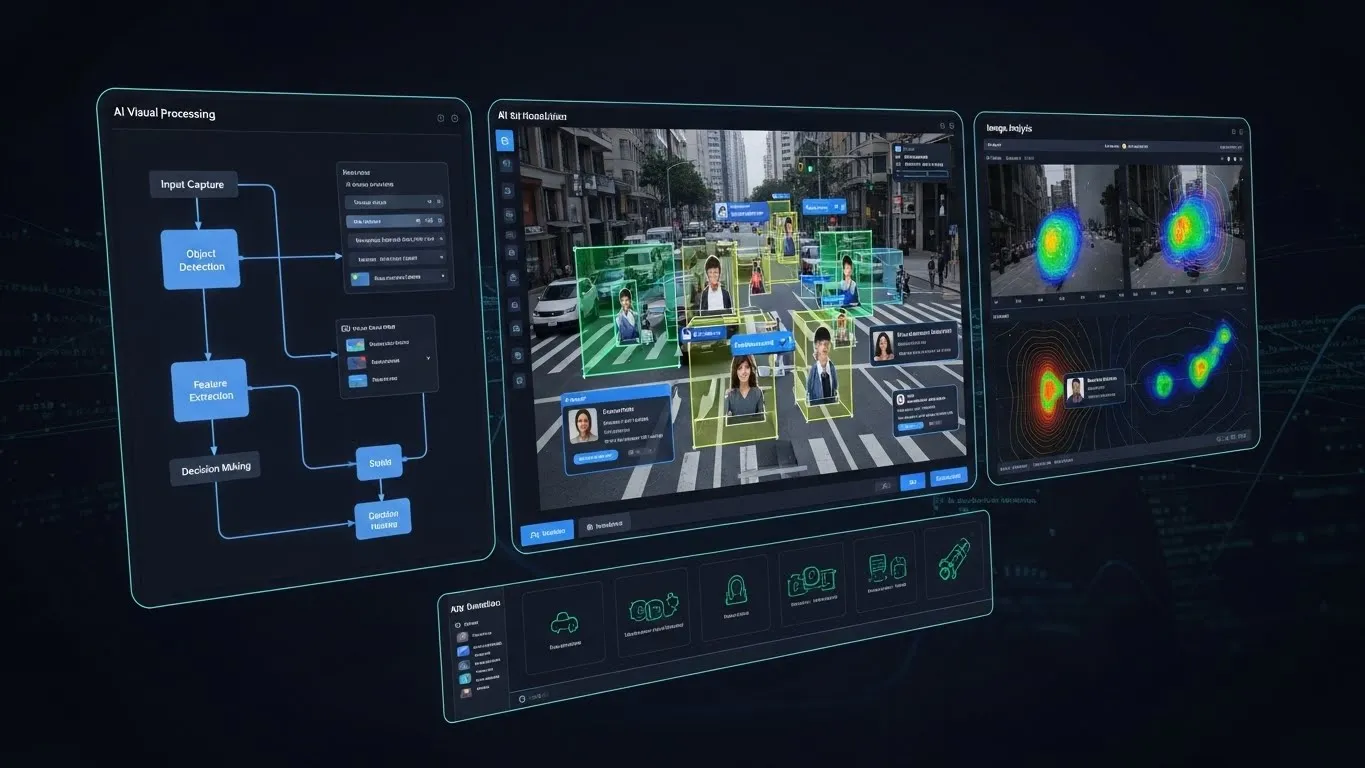
In today's dynamic business landscape, the ability to extract meaningful insights from vast amounts of data is no longer a luxury—it's a necessity. Machine learning algorithms are at the forefront of this revolution, empowering organizations to understand customer behavior, optimize operations, and predict future trends with unprecedented accuracy. This article delves into how mastering machine learning algorithms can unlock significant business value and drive informed decision-making.
Key Points:
- Data-Driven Decisions: Leverage ML for actionable insights.
- Algorithm Diversity: Understand various ML types for different business needs.
- Real-World Applications: Explore practical use cases across industries.
- Implementation Strategies: Learn key steps for successful ML deployment.
- Future Trends: Stay ahead with evolving ML capabilities.
Mastering Machine Learning Algorithms for Business Insights Today
The journey to transforming raw data into strategic advantages begins with understanding and applying the right machine learning algorithms. These powerful tools, inspired by how humans learn, can identify patterns, make predictions, and automate complex tasks. For businesses, this translates into enhanced efficiency, improved customer satisfaction, and a stronger competitive edge. Whether you're looking to predict sales figures, personalize marketing campaigns, or detect fraudulent transactions, machine learning offers a robust framework for achieving these goals.
Understanding the Core of Machine Learning Algorithms
At its heart, machine learning involves training algorithms on data to learn patterns and make predictions or decisions without being explicitly programmed. The effectiveness of these algorithms hinges on the quality and quantity of data used for training, as well as the appropriate selection of the algorithm itself. For readers looking to deepen their understanding of the foundational concepts, exploring resources on supervised versus unsupervised learning would be beneficial.
Key Machine Learning Algorithm Categories for Business
To effectively harness machine learning, it's crucial to grasp the different categories of algorithms and their respective strengths. This section explores some of the most impactful types for business intelligence.
Supervised Learning: Learning from Labeled Examples
Supervised learning algorithms learn from a labeled dataset, meaning each data point has a corresponding "correct" output. This is akin to a student learning with an answer key.
- Regression Algorithms: Used for predicting continuous values.
- Linear Regression: Predicts a target variable based on a linear relationship with one or more predictor variables. Example: Predicting house prices based on square footage.
- Polynomial Regression: Extends linear regression to model relationships that are not strictly linear. Example: Forecasting sales growth that accelerates over time.
- Decision Trees (Regression Trees): Creates a tree-like model of decisions and their possible consequences. Example: Predicting customer lifetime value based on demographics and purchasing history.
- Classification Algorithms: Used for predicting categorical outcomes.
- Logistic Regression: Predicts the probability of a binary outcome (yes/no, true/false). Example: Predicting whether a customer will click on an ad.
- Support Vector Machines (SVM): Finds the optimal hyperplane to separate data points into different classes. Example: Image recognition, like identifying spam emails.
- K-Nearest Neighbors (KNN): Classifies a new data point based on the majority class of its 'k' nearest neighbors. Example: Recommending products based on similar customer behavior.
- Naïve Bayes: A probabilistic classifier based on Bayes' theorem, assuming independence between features. Example: Text classification, such as sentiment analysis.
Unsupervised Learning: Discovering Hidden Patterns
Unsupervised learning algorithms work with unlabeled data, aiming to find inherent structures, patterns, or relationships within the data. This is like exploring a dataset without prior knowledge of what you're looking for.
- Clustering Algorithms: Group similar data points together.
- K-Means Clustering: Partitions data into 'k' distinct clusters, where each data point belongs to the cluster with the nearest mean. Example: Customer segmentation for targeted marketing.
- Hierarchical Clustering: Creates a tree of clusters, allowing for different levels of granularity. Example: Grouping similar products for inventory management.
- Dimensionality Reduction Algorithms: Reduce the number of variables in a dataset while retaining important information.
- Principal Component Analysis (PCA): Transforms data into a new set of uncorrelated variables called principal components. Example: Reducing the complexity of large datasets for faster analysis.
- t-Distributed Stochastic Neighbor Embedding (t-SNE): Primarily used for visualizing high-dimensional data in a lower-dimensional space. Example: Visualizing clusters of customer behaviors.
- Association Rule Learning: Discovers relationships between variables in large datasets.
- Apriori Algorithm: Identifies frequent itemsets and generates association rules. Example: "Market basket analysis," understanding which products are often bought together.
Reinforcement Learning: Learning Through Trial and Error
Reinforcement learning algorithms learn by interacting with an environment, receiving rewards for desirable actions and penalties for undesirable ones.
- Q-Learning: An algorithm that learns the optimal action-policy for a given state. Example: Optimizing inventory reordering policies in real-time.
- Deep Q-Networks (DQN): Combines Q-learning with deep neural networks to handle complex, high-dimensional state spaces. Example: Algorithmic trading strategies.
Practical Business Applications of Machine Learning
The theoretical power of machine learning algorithms translates into tangible business benefits across various sectors. Understanding these applications can spark innovative ideas for your organization.
Enhancing Customer Experience
- Personalized Recommendations: Algorithms like KNN and collaborative filtering analyze past behavior to suggest relevant products or content, increasing engagement and sales. For instance, e-commerce giants use these to power their "Customers who bought this also bought..." sections.
- Sentiment Analysis: Natural Language Processing (NLP) powered by algorithms like Naïve Bayes can gauge customer emotions from reviews, social media, and support tickets, enabling proactive issue resolution and service improvement.
- Customer Churn Prediction: Logistic Regression and Decision Trees can identify customers at risk of leaving, allowing businesses to implement retention strategies.
Optimizing Operations and Efficiency
- Demand Forecasting: Regression algorithms can predict future product demand, helping optimize inventory levels, supply chain management, and resource allocation. A report from McKinsey in 2024 highlighted that advanced analytics, including ML-driven forecasting, can improve accuracy by up to 20%.
- Fraud Detection: Classification algorithms like SVM and Naïve Bayes are crucial for identifying fraudulent transactions in finance and e-commerce, saving companies significant financial losses.
- Predictive Maintenance: Machine learning models can predict equipment failures before they occur, enabling scheduled maintenance and reducing downtime. This is a cornerstone of modern manufacturing and logistics.
Driving Strategic Decision-Making
- Market Segmentation: Clustering algorithms (e.g., K-Means) group customers into distinct segments based on demographics, behavior, and preferences, enabling highly targeted marketing campaigns.
- Risk Assessment: Logistic Regression and other classification models are used in finance for credit scoring and risk assessment.
- Price Optimization: Algorithms can analyze market trends, competitor pricing, and demand elasticity to suggest optimal pricing strategies for products and services.
Implementing Machine Learning in Your Business
Successfully integrating machine learning requires a strategic approach. Here are key steps to consider:
- Define Clear Business Objectives: What specific problems are you trying to solve or opportunities are you trying to seize? Vague goals lead to unfocused ML projects.
- Data Collection and Preparation: This is often the most time-consuming phase. Ensure you have sufficient, high-quality, and relevant data. Data cleaning, feature engineering, and labeling are critical.
- Algorithm Selection: Choose algorithms that align with your objectives and data type. For example, use classification for yes/no outcomes and regression for numerical predictions.
- Model Training and Evaluation: Train your chosen algorithm on the prepared data and rigorously evaluate its performance using appropriate metrics (accuracy, precision, recall, R-squared, etc.).
- Deployment and Monitoring: Integrate the trained model into your business processes. Continuously monitor its performance and retrain as necessary, especially as data patterns evolve.
- Iterate and Improve: Machine learning is an iterative process. Continuously analyze results, gather feedback, and refine your models and strategies.
A 2025 Gartner report indicated that organizations prioritizing robust data governance alongside ML implementation see a 30% higher success rate in achieving their business outcomes.
Differentiated Insights: The Rise of Explainable AI and Edge ML
While many articles focus on core algorithms, two emerging areas offer significant differentiated value:
- Explainable AI (XAI): As ML models become more complex, understanding why a model makes a particular prediction is crucial, especially in regulated industries like finance and healthcare. XAI techniques aim to make AI decisions transparent, fostering trust and aiding in debugging. This contrasts with older "black box" models that provided outputs without clear reasoning.
- Edge Machine Learning: Traditionally, ML models run on centralized servers or in the cloud. Edge ML involves deploying models directly onto devices (like IoT sensors, smartphones, or autonomous vehicles). This offers real-time processing, reduced latency, enhanced privacy, and lower bandwidth requirements. For instance, a smart camera using edge ML can detect anomalies locally without sending video streams to the cloud. This trend, highlighted in recent industry analyses from 2024 and projected to grow, is revolutionizing applications in manufacturing, retail, and smart cities.
The Future of Machine Learning in Business
The field of machine learning is constantly evolving. We can expect advancements in areas like:
- Automated Machine Learning (AutoML): Tools that automate parts of the ML pipeline, making it more accessible to non-experts.
- Deep Learning Enhancements: More sophisticated neural network architectures for complex tasks like natural language understanding and advanced image/video analysis.
- Ethical AI and Bias Mitigation: Increasing focus on developing fair, unbiased, and responsible AI systems.
Frequently Asked Questions (FAQ)
Q1: What is the most important first step when considering machine learning for business insights? A1: The most critical first step is to clearly define your business problem or objective. Understanding precisely what you want to achieve will guide your data strategy, algorithm selection, and ultimately, the success of your machine learning initiative.
Q2: How much data is typically needed to train a machine learning model effectively? A2: The amount of data required varies significantly based on the algorithm's complexity and the problem's nature. Simpler models might perform well with thousands of data points, while deep learning models for complex tasks like image recognition can require millions. Quality is often more important than sheer quantity.
Q3: Can small businesses leverage machine learning algorithms? A3: Absolutely. While large enterprises have extensive resources, the rise of cloud-based ML platforms and AutoML tools has democratized access. Small businesses can start with simpler applications like customer segmentation or basic sales forecasting using readily available tools.
Q4: What is the difference between AI, Machine Learning, and Deep Learning? A4: AI is the broad concept of creating intelligent machines. Machine Learning is a subset of AI that allows systems to learn from data without explicit programming. Deep Learning is a subset of Machine Learning that uses neural networks with multiple layers to learn complex patterns.
Conclusion: Embrace the Power of Machine Learning Today
Mastering machine learning algorithms is an ongoing journey, but the rewards in terms of actionable business insights and competitive advantage are immense. By understanding the diverse range of algorithms available, their practical applications, and best practices for implementation, your organization can unlock new levels of efficiency, customer understanding, and strategic foresight. The future of business intelligence is undoubtedly data-driven, and machine learning is the engine powering that transformation.
We encourage you to share your experiences and thoughts on using machine learning for business insights in the comments below. For those eager to delve deeper, consider exploring our related articles on AI ethics in business and the practical applications of natural language processing.
Potential Internal Link Placements:
- Readers interested in the foundational concepts might benefit from exploring our guide on supervised versus unsupervised learning.
- For a deeper dive into specific applications, our articles on predictive analytics for retail and fraud detection techniques would be relevant.
- Those looking to understand the ethical implications of AI could explore our piece on responsible AI development.