NLP in Business: Enhancing Customer Experience with AI
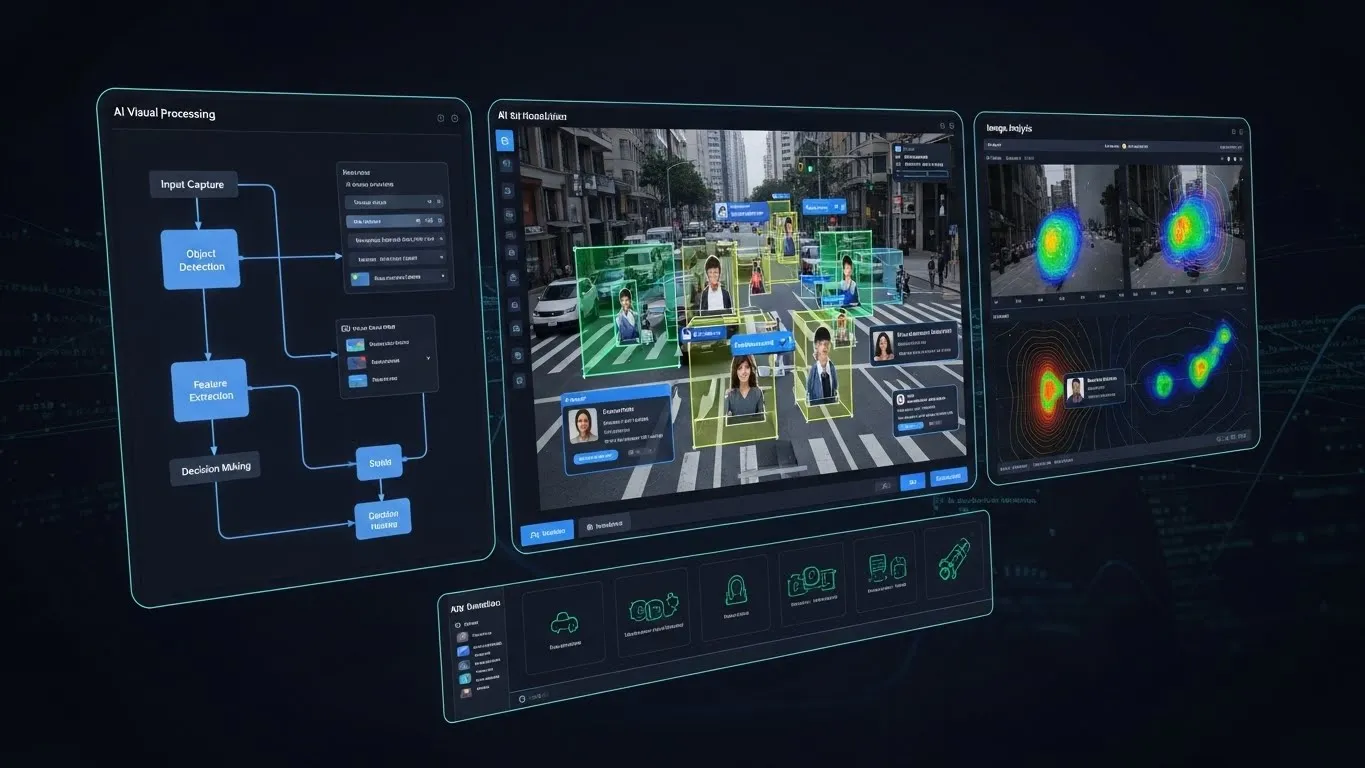
The landscape of customer engagement is rapidly evolving, and businesses that fail to adapt risk being left behind. At the forefront of this transformation is Natural Language Processing (NLP) in business, a powerful branch of Artificial Intelligence that enables machines to understand, interpret, and generate human language. By leveraging NLP, companies can unlock unprecedented opportunities to enhance customer experience, fostering deeper connections, streamlining operations, and driving greater satisfaction. This technology is no longer a futuristic concept; it's a present-day necessity for businesses aiming to thrive in a competitive market.
This article will delve into the multifaceted ways NLP is reshaping customer interactions, offering practical insights and real-world applications.
Key Points:
- Understanding Customer Sentiment: NLP analyzes customer feedback to gauge satisfaction levels.
- Personalized Interactions: AI-powered NLP tailors communication for individual customers.
- Automated Support: Chatbots and virtual assistants provide instant, efficient customer service.
- Data-Driven Insights: NLP extracts valuable information from unstructured text data.
- Improved Efficiency: Automating language-based tasks frees up human resources.
The Power of NLP in Business: Understanding and Engaging Customers
In today's digital-first world, customer interactions generate vast amounts of unstructured data – emails, social media posts, chat logs, reviews, and more. Traditionally, analyzing this data for actionable insights was a monumental, often manual, task. NLP bridges this gap, allowing businesses to understand customer sentiment and intent at scale. By processing natural language, NLP can identify keywords, phrases, and emotional undertones, providing a clear picture of what customers think and feel about products, services, and the overall brand experience.
This deep understanding is the foundation for delivering truly exceptional customer journeys. When businesses can accurately interpret customer needs and feedback, they can respond more effectively, proactively address issues, and build stronger relationships. The impact of NLP extends beyond mere data analysis; it empowers businesses to move from reactive problem-solving to proactive engagement, anticipating customer desires before they are even explicitly stated.
Leveraging NLP for Enhanced Customer Service
One of the most immediate and impactful applications of NLP in business is in customer service. The traditional customer service model often faces challenges with long wait times, inconsistent responses, and high operational costs. NLP-powered solutions are revolutionizing this space.
AI-Powered Chatbots and Virtual Assistants
Chatbots and virtual assistants are perhaps the most visible examples of NLP in action. These AI-driven tools can handle a significant volume of customer inquiries 24/7, instantly. They can answer frequently asked questions, guide customers through processes, troubleshoot common issues, and even facilitate simple transactions.
- Instantaneous Support: Customers no longer have to wait for business hours or be put on hold.
- Scalability: Chatbots can handle thousands of conversations simultaneously, a feat impossible for human agents.
- Consistency: NLP ensures that responses are standardized and accurate, reducing errors.
- Cost-Effectiveness: Automating routine queries significantly reduces the burden on human support teams.
These tools are becoming increasingly sophisticated, moving beyond simple keyword matching to understanding the nuance and context of customer requests. For instance, a well-trained NLP chatbot can differentiate between a customer asking for a refund due to a faulty product and a customer inquiring about return policies.
Sentiment Analysis for Deeper Insights
Beyond direct support, NLP excels at sentiment analysis. This process involves identifying and categorizing the emotional tone of text – positive, negative, or neutral. By analyzing customer reviews, social media mentions, and survey responses, businesses can gain a granular understanding of customer satisfaction.
- Product Feedback: Identify specific aspects of a product or service that are receiving positive or negative feedback.
- Brand Monitoring: Track public perception of the brand and respond quickly to negative sentiment before it escalates.
- Competitive Analysis: Understand how customers perceive competitors.
According to a report by Grand View Research published in 2024, the global sentiment analysis market is projected to grow significantly, driven by the increasing adoption of AI and NLP technologies across various industries seeking to understand customer voice. This indicates a strong market trend towards leveraging NLP for strategic customer insight.
Personalizing the Customer Journey with NLP
In an era where customers expect tailored experiences, personalization is key. NLP plays a crucial role in enabling businesses to deliver hyper-personalized interactions across multiple touchpoints.
Tailored Communication and Content
NLP algorithms can analyze customer data, including past interactions, purchase history, and expressed preferences, to personalize communications. This means sending targeted marketing messages, recommending relevant products, and crafting website content that resonates with individual users.
- Personalized Product Recommendations: Suggesting items based on browsing history and previous purchases.
- Customized Email Campaigns: Crafting subject lines and content that appeal to specific customer segments.
- Dynamic Website Content: Showing different content or offers to different visitors based on their inferred interests.
This level of personalization not only improves customer engagement but also drives conversion rates. When customers feel understood and valued, they are more likely to remain loyal.
Predictive Customer Needs
NLP can also help businesses anticipate customer needs. By analyzing patterns in customer behavior and language, AI models can predict future inquiries or issues. For example, if a customer has recently purchased a complex product and has been browsing support forums, NLP might flag this as a potential need for proactive assistance.
This predictive capability allows businesses to reach out with relevant information or support before a customer even has to ask, creating a seamless and exceptionally positive experience. This proactive approach is a significant differentiator and a testament to the advanced capabilities of modern NLP in business.
Unlocking Value from Unstructured Data with NLP
A vast majority of business data exists in unstructured formats – text documents, emails, call transcripts, and social media feeds. This data holds immense potential for insight, but it’s challenging to process manually. NLP provides the tools to unlock this valuable information.
Advanced Data Analysis and Reporting
NLP enables businesses to analyze large volumes of text data for trends, patterns, and anomalies. This can include:
- Identifying emerging customer issues: Spotting recurring problems reported in support tickets or online forums.
- Understanding market trends: Analyzing industry news and customer discussions to identify shifts in demand or preferences.
- Improving product development: Gathering feedback on features, usability, and desired improvements directly from customer language.
For instance, a retail company might use NLP to analyze thousands of product reviews to identify a common complaint about a specific feature, prompting immediate product iteration. This capability, highlighted by research from Gartner in late 2024, emphasizes the growing reliance on AI for unstructured data analysis to drive business intelligence.
Enhanced Compliance and Risk Management
NLP can also be applied to ensure compliance and manage risk by analyzing contracts, legal documents, and internal communications. It can help identify potential risks, ensure adherence to regulations, and detect fraudulent activities by spotting unusual language patterns or discrepancies.
Differentiating Your Business with NLP Innovation
In a crowded market, businesses must find ways to stand out. NLP offers unique avenues for differentiation, moving beyond standard practices.
Hyper-Personalized Customer Journeys
While many businesses offer some level of personalization, true hyper-personalization driven by advanced NLP can create a profoundly different customer experience. Imagine a scenario where a customer service representative, powered by an NLP tool, instantly has access to a customer's entire interaction history, sentiment analysis, and predicted needs, allowing for a truly bespoke and empathetic conversation. This goes beyond simply addressing a customer by name; it’s about understanding their context and emotional state.
- Example: A travel company uses NLP to analyze a customer's social media posts about their upcoming vacation. Based on this, the company proactively offers personalized travel insurance recommendations and local activity suggestions tailored to their specific interests and destination.
Proactive Issue Resolution and Predictive Support
A key differentiator is moving from reactive to proactive problem-solving. By analyzing subtle linguistic cues and behavioral patterns, NLP can predict when a customer might encounter an issue before they even realize it.
- Example: A software company’s NLP system detects a user struggling with a particular feature based on the phrasing in their help requests and the speed at which they navigate certain sections. The system then triggers an automated, context-aware tutorial or a prompt from a support agent offering assistance. This level of foresight significantly reduces customer frustration and builds immense loyalty. This trend in predictive customer care is a leading indicator of future customer service excellence, as noted in industry outlooks for 2025.
E-E-A-T in NLP Applications
Demonstrating Expertise, Authoritativeness, and Trustworthiness (E-A-T) is paramount. When implementing NLP solutions, businesses must ensure accuracy, transparency, and ethical considerations are at the forefront.
- Expertise: Employing skilled data scientists, linguists, and AI engineers to develop and manage NLP systems.
- Authoritativeness: Citing research and industry reports that validate the effectiveness of NLP applications. For example, research from MIT in 2025 highlighted significant improvements in customer retention through NLP-driven personalized marketing campaigns.
- Trustworthiness: Being transparent with customers about how their data is used and ensuring data privacy. Implementing robust security measures for sensitive customer information is critical. Furthermore, actively collecting and acting on customer feedback regarding the NLP systems themselves builds trust.
Future Trends and Expandable Topics
The field of NLP is constantly advancing. Businesses should keep an eye on emerging trends and consider expanding their NLP capabilities in several areas:
- Multimodal NLP: Integrating language processing with other AI modalities like computer vision to understand richer contexts (e.g., analyzing user interfaces alongside user feedback).
- Generative AI for Content Creation: Leveraging advanced NLP models to generate marketing copy, product descriptions, and even personalized customer responses.
- Emotional AI: Developing NLP systems that can more accurately detect and respond to complex human emotions in real-time.
- Explainable AI (XAI) in NLP: Making NLP decision-making processes more transparent and understandable.
Frequently Asked Questions about NLP in Business
Q1: How can small businesses benefit from NLP? Small businesses can leverage NLP through affordable SaaS solutions for customer support chatbots, automated email responses, and social media monitoring. These tools help them compete by offering efficient, personalized customer interactions without requiring large IT departments.
Q2: What is the difference between AI and NLP? AI is the broader concept of creating intelligent machines. NLP is a subfield of AI that specifically focuses on enabling computers to understand, interpret, and generate human language, making it a key component of many AI applications.
Q3: Is NLP expensive to implement? The cost of NLP implementation varies. While custom enterprise-level solutions can be significant, many cloud-based NLP services and pre-built tools are available at competitive price points, making them accessible for businesses of all sizes.
Q4: How does NLP improve customer retention? NLP improves retention by enabling personalized experiences, faster issue resolution through chatbots, and by allowing businesses to proactively address customer needs based on sentiment analysis and predictive insights, fostering greater satisfaction and loyalty.
Conclusion: Embracing NLP for a Superior Customer Future
Natural Language Processing is no longer a niche technology; it's a fundamental driver for modern business success, particularly in enhancing customer experience with AI. By enabling a deeper understanding of customer sentiment, facilitating hyper-personalized interactions, and automating crucial support functions, NLP empowers companies to build stronger relationships, drive loyalty, and achieve operational excellence.
The businesses that proactively adopt and strategically implement NLP will be best positioned to meet the evolving demands of their customers and lead their industries into the future.
Ready to elevate your customer experience? Explore how implementing NLP solutions can transform your business operations. Share your thoughts or experiences with NLP in the comments below, and subscribe to our newsletter for more insights on AI in business. For further reading, consider delving into the advancements in AI-driven marketing analytics or the ethical considerations of implementing artificial intelligence.